Much Ado About Nothing
She Can Remember
When her gallbladder ruptures in Reno, she is reading Sense and Sensibility—an ironic literary companion to the senselessness about to override her existence.
What follows is a medical catastrophe that leaves her with both retrograde and anterograde amnesia, effectively erasing nearly everything she knows about herself and the world around her.
Her memories of the experience exist as disconnected Polaroid snapshots: the worn pages of a familiar book, a messy ponytail, the deafening sirens of an ambulance, and the unfamiliar familiarity of a hospital room. She awakens at St. Mary's Hospital with 99 percent of her existence seemingly erased. She recognizes the people around her but cannot remember who, exactly, she is, where she lives, or how to navigate even the simplest routines. Her friends leave notes so Michelle knew where she was when she woke up.
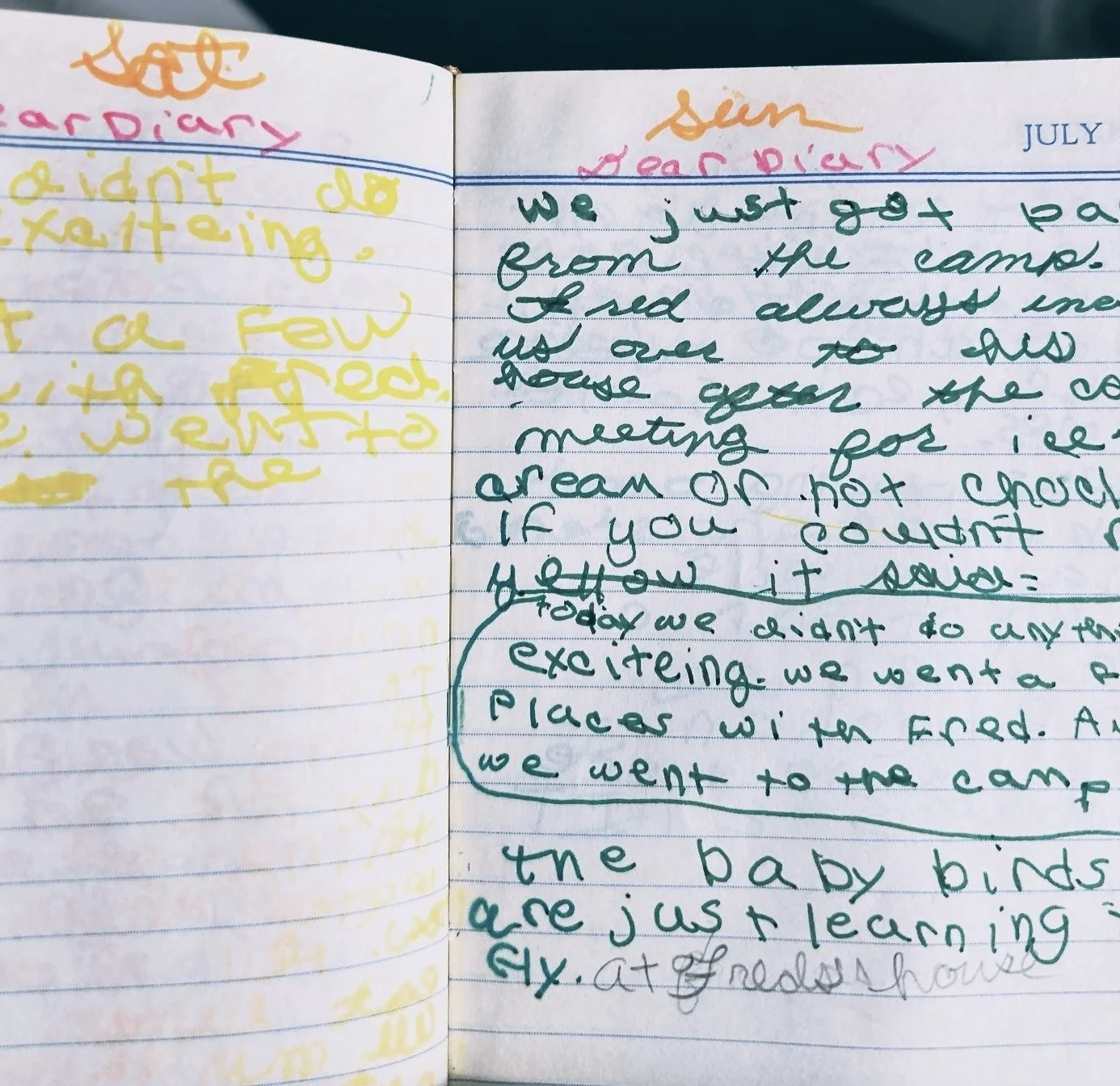
A woman who once relied heavily on instinct suddenly has none. The one identity that survives is that of a writer. Writing becomes Michelle’s means of documenting a reality she cannot otherwise comprehend; a fragile thread connecting the fragments of her existence.
But another fixation emerges: vodka. As her friends attempt to help her rebuild a life she cannot remember, alcohol becomes her primary source of comfort, motivation, and perceived safety. She becomes increasingly dependent on it, even as her drinking damages the relationships sustaining her. The people who care for her offer transportation, companionship, shelter, and support, but their kindness cannot indefinitely accommodate her growing dependence. Or her.
The roots of her unraveling stretch further into her mother's death from a brain tumor when Michelle was seventeen, a lifetime of upheaval, a marriage that began during an internship at NASA, and a divorce sixteen years later that leaves her penniless in Reno, all form the fragmented history of a life that’s now a puzzle. None of the puzzle pieces fit, and most of the pieces are missing.
Caught between a past she cannot retrieve and a present she cannot hold onto, she lives in a constant state of fear, confusion, and psychological disorientation. Writing and vodka become her lifelines: one attempting to make sense of the fragments, the other offering temporary refuge from them.
This is a story about the terrifying fragility of identity, the consequences of profound memory loss, the complicated nature of addiction, and the people who try to love someone who can no longer reliably recognize herself. At its heart, it is an exploration of what remains when memory disappears—and whether the self can be reconstructed from the few pieces that survive.
Now, after seven years without alcohol, Michelle’s mental health is dependent on just one thing: writing.